
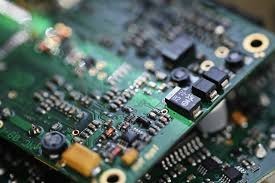
Few inventions have shaped the modern world as profoundly as the printed circuit board (PCB). Present in virtually every electronic device—from the simplest remote control to the most advanced supercomputer—a PCB serves as the physical platform that organizes and connects electronic components into functional systems. Despite its widespread use, the PCB remains largely invisible to end users and underappreciated outside engineering circles.
This educational article provides a clear, structured explanation of what a PCB is, how it functions, how it is designed and manufactured, the different forms it takes, and why it continues to be indispensable. Written from a neutral perspective and grounded in established technical principles, the goal is to offer readers a thorough yet accessible foundation for understanding this cornerstone of electronics.
Origins and Historical Context
The need for a reliable method to interconnect electronic components arose as circuits became more complex in the early 20th century. Early radios and amplifiers were built using point-to-point wiring on metal chassis or terminal strips—a process that was slow, inconsistent, and difficult to troubleshoot or reproduce at scale.
Ideas for “printed” wiring appeared as early as the 1920s, but practical development accelerated during World War II. Engineers in the United States, Britain, and Germany independently created early forms of printed circuits for military applications, such as proximity fuzes and portable radios. These wartime boards typically used conductive ink screen-printed onto ceramic or phenolic substrates.
After 1945, the technology transitioned to civilian use. The Auto-Sembly process developed in the late 1940s allowed automated component insertion, and by the 1950s PCBs were standard in consumer products like transistor radios. Double-sided boards with plated-through holes emerged in the late 1950s, followed by multi-layer constructions in the 1960s. The shift from through-hole to surface-mount technology in the 1980s and 1990s dramatically reduced size and cost while increasing density. Subsequent innovations—high-density interconnect (HDI), flexible circuits, and advanced materials—have kept pace with the demands of smartphones, electric vehicles, and 5G infrastructure.
This steady evolution reflects a consistent engineering objective: achieve higher performance, greater reliability, and lower cost within ever-smaller spaces.
Fundamental Purpose and Operation
A PCB fulfills two essential roles:
- Mechanical support: It provides a stable, flat surface on which components are mounted.
- Electrical interconnection: It replaces discrete wires with patterned conductive pathways.
The board begins as a laminate of non-conductive substrate material coated with thin copper foil. Through photolithographic and chemical processes, unwanted copper is removed, leaving behind a precise network of traces, pads, and planes. Components are soldered to pads, and signals travel along traces with controlled impedance and minimal interference.
Additional functional layers include a solder mask that insulates traces and defines solderable areas, and a silkscreen layer that adds human-readable markings for assembly and servicing.
In multi-layer boards, internal copper planes often serve as dedicated power or ground distribution networks, reducing noise and improving electromagnetic compatibility.
Categories of PCBs
PCBs are classified primarily by their physical construction and intended use:
- Single-layer (single-sided): Copper on one side only. Used for simple, low-cost applications such as timers, calculators, and basic power supplies.
- Double-layer (double-sided): Copper on both sides, connected by plated-through vias. Widely employed in mid-complexity devices including audio equipment, industrial controllers, and most desktop computer peripherals.
- Multi-layer: Four or more conductive layers separated by insulating prepreg and bonded under heat and pressure. Common in high-performance systems requiring dense routing and low noise, such as smartphones, servers, and medical imaging devices.
- Flexible: Constructed on polyimide or similar flexible substrates, allowing bending or folding. Essential for compact or moving assemblies, including wearable devices, camera modules, and printer mechanisms.
- Rigid-flex: Combines rigid multi-layer sections with flexible interconnects in a single unified structure. Frequently specified in aerospace, military, and high-reliability medical equipment.
- High-density interconnect (HDI): Incorporates microvias, blind and buried vias, and finer trace geometries to achieve significantly higher component density per unit area. Dominant in modern mobile devices and advanced automotive electronics.
Other specialized types include metal-core boards for superior heat dissipation in LED lighting and power electronics, and high-frequency boards using low-loss dielectrics for RF and microwave applications.
Materials and Their Properties
Material selection directly affects electrical behavior, thermal performance, mechanical robustness, and manufacturing cost.
The most prevalent substrate is FR-4, a woven glass-fabric reinforced epoxy resin classified as flame-retardant grade 4. It offers an excellent balance of strength, dimensional stability, electrical insulation, and affordability. Variants with higher glass-transition temperature (Tg) are chosen when boards must endure the higher temperatures of lead-free soldering.
For high-frequency or high-speed digital circuits, materials with lower dielectric constant and dissipation factor—such as PTFE-based laminates or hydrocarbon/ceramic composites—are preferred to minimize signal loss and distortion.
Flexible circuits typically use polyimide films valued for their thermal stability and resistance to repeated flexing. Conductive layers are almost always copper foil, with thickness ranging from 18 µm to 70 µm depending on current requirements.
Surface finishes protect exposed copper pads from oxidation and enhance solderability. Common options include electroless nickel immersion gold (ENIG), immersion silver, immersion tin, and organic solderability preservatives (OSP). Each finish presents different trade-offs in shelf life, cost, and compatibility with assembly processes.
Environmental regulations have driven widespread adoption of halogen-free laminates and lead-free finishes, aligning performance with sustainability goals.
Design and Manufacturing Workflow
Creating a PCB involves a sequence of tightly controlled steps:
- Schematic capture and layout design using electronic design automation (EDA) software.
- Generation of phototools or direct laser imaging files.
- Substrate preparation and copper cladding.
- Application of photoresist and pattern exposure.
- Chemical development and etching to form conductive features.
- Drilling or laser ablation of vias and through-holes.
- Electroplating to deposit copper in holes and build trace thickness.
- Lamination of inner layers (for multi-layer boards) under heat and pressure.
- Application of solder mask via screen printing or photoimaging.
- Silkscreen legend printing.
- Final surface finish deposition.
- Electrical testing, automated optical inspection, and dimensional verification.
The entire process adheres to industry standards published by the IPC (Association Connecting Electronics Industries), ensuring consistency and reliability across global suppliers.
Component assembly—transforming a bare PCB into a populated printed circuit board assembly (PCBA)—follows separately, using surface-mount placement machines, reflow soldering, and inspection systems.
Broader Impact and Applications
PCBs enable the scale, performance, and affordability that define contemporary electronics. They appear in:
- Consumer products ranging from televisions and gaming consoles to kitchen appliances
- Transportation systems, including engine control modules, infotainment, and advanced driver-assistance features in vehicles
- Healthcare devices such as MRI scanners, pacemakers, and portable diagnostic tools
- Telecommunications infrastructure supporting mobile networks and data centers
- Industrial automation, robotics, and renewable energy conversion systems
- Aerospace and defense platforms requiring extreme reliability under harsh conditions
By standardizing interconnection, PCBs have dramatically lowered barriers to innovation, allowing engineers to focus on functionality rather than wiring.
Contemporary Developments and Future Directions
As of late 2025, several trends are shaping PCB technology:
- Continued miniaturization through finer geometries and advanced HDI structures
- Growing adoption of flexible and stretchable circuits for wearable and biomedical applications
- Integration of passive components directly into inner layers to save space
- Development of substrates with improved thermal conductivity for high-power applications
- Increased emphasis on recyclable and bio-based materials to reduce environmental impact
- Greater automation in design tools, incorporating artificial intelligence for layout optimization and manufacturability checking
These advancements ensure that PCBs will remain central to emerging fields such as 6G communications, autonomous systems, and sustainable energy technologies.
Final Thoughts
A printed circuit board, or pcb board, represents a remarkable convergence of materials science, precision manufacturing, and electrical engineering. Though rarely seen by end users, it forms the essential platform upon which the entire electronic ecosystem rests.
Developing a clear understanding of PCBs— their structure, varieties, materials, fabrication, and role in modern systems—provides valuable insight into the physical realities behind the digital world. As technology advances, the PCB will continue to evolve, quietly supporting new generations of innovative devices that improve quality of life, expand knowledge, and connect humanity.
 Solstice